ZooQuarium Live
A scalable, accessible web platform that centralizes live animal cameras from zoos and aquariums across the United States.
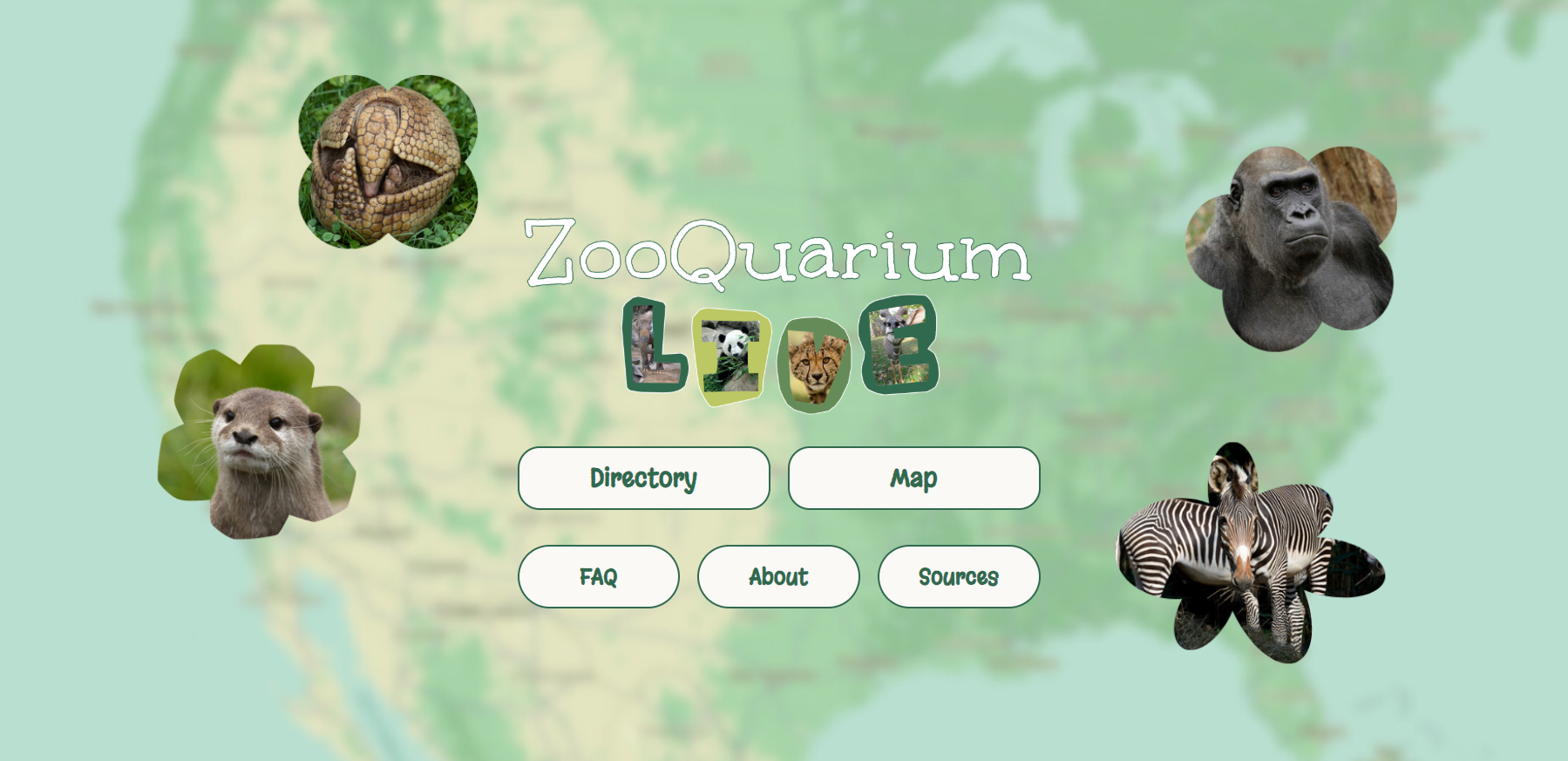
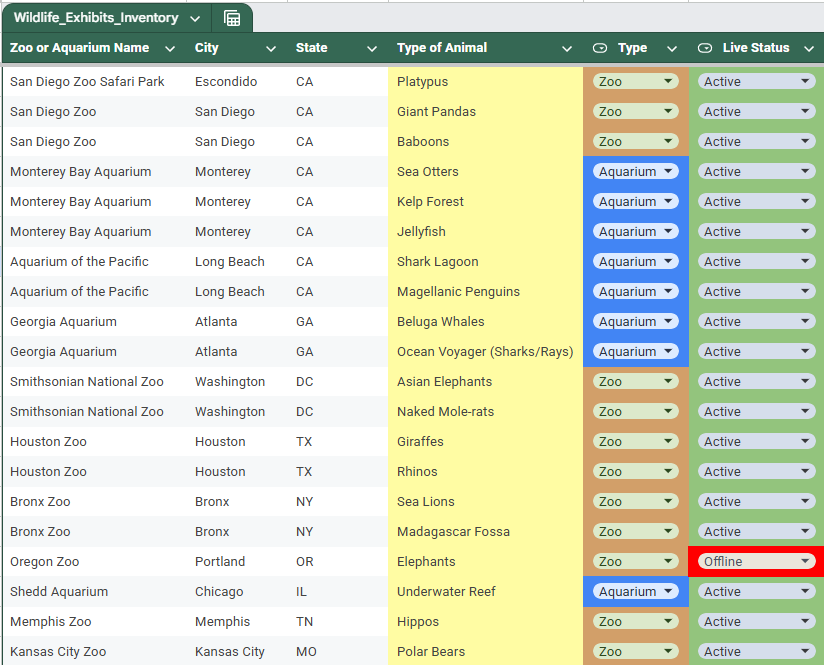
The inspiration sparked from a conversation with my partner who mistakenly believed platypuses were extinct. Knowing the San Diego Zoo offered a live platypus cam, I realized there was no central hub for this kind of educational content. I began by compiling and categorizing data from institutions actively involved in wildlife conservation, organizing their live feeds by state and species.
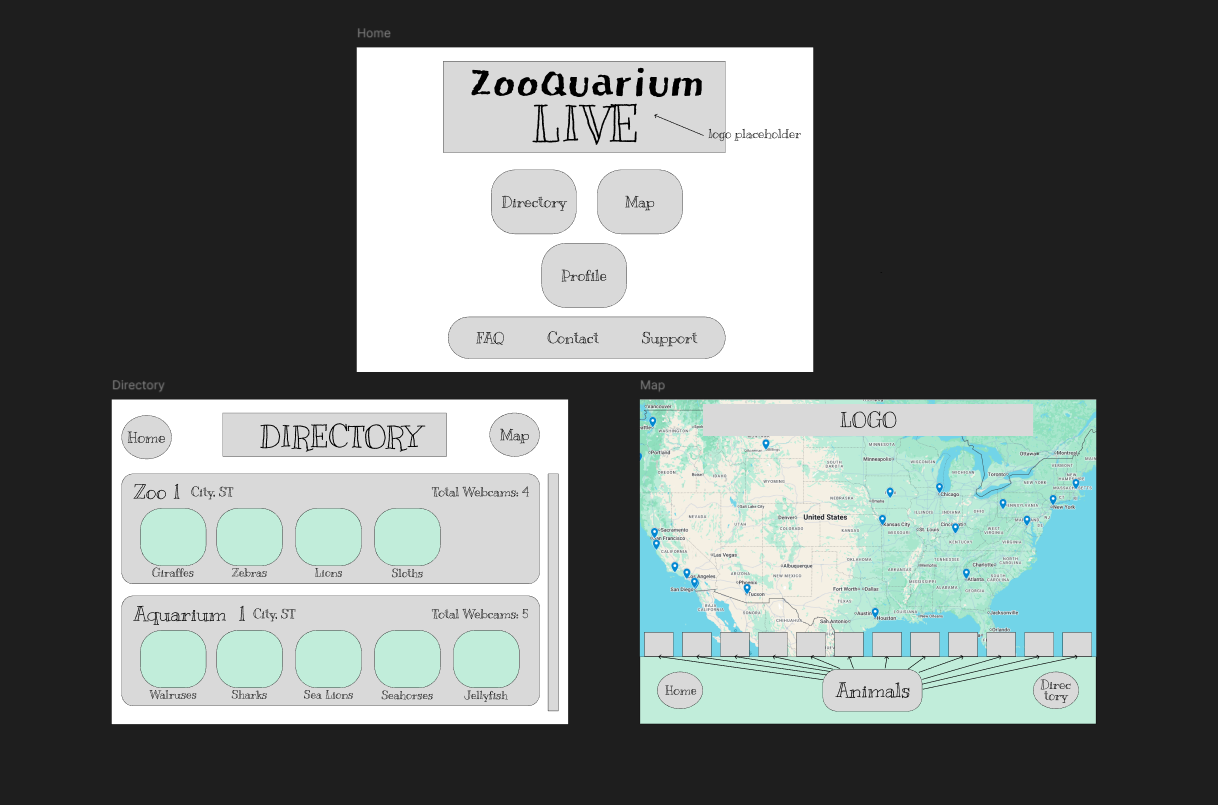
From storyboards to Figma wireframes, my priority was creating a scalable content structure. The architecture needed to seamlessly accommodate new live cam sources over time without breaking the layout. I established two primary user flows: a species-based directory and a geography-based interactive map.
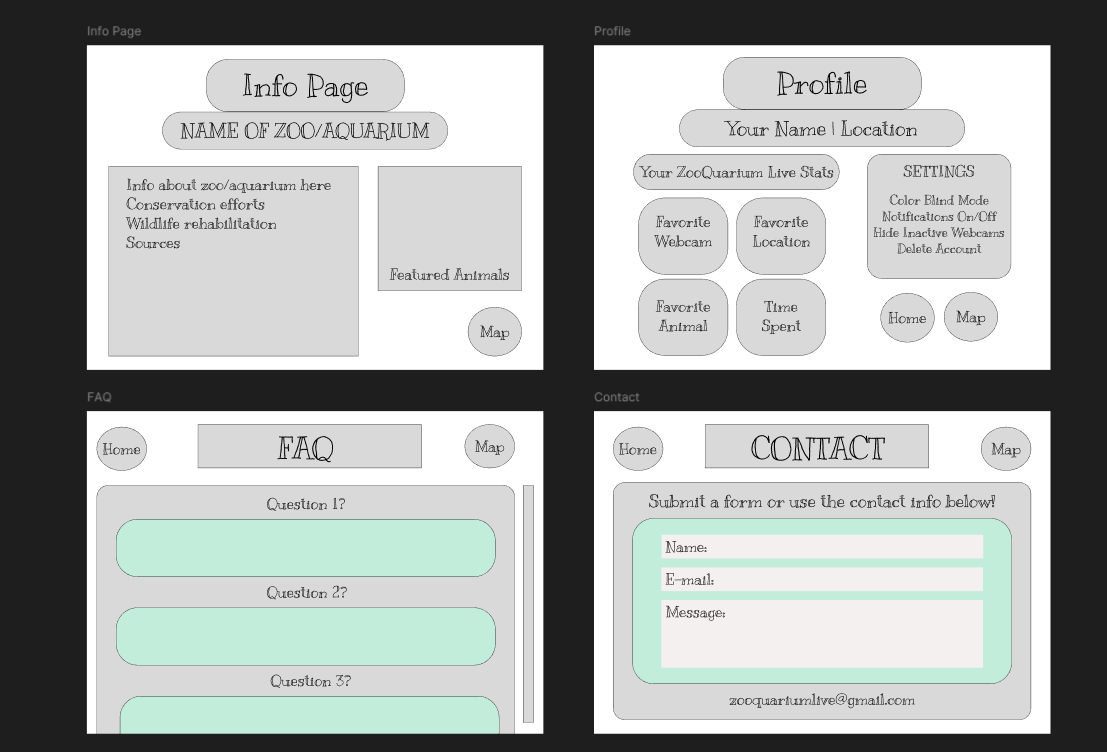
Because the target audience ranges from teachers in a classroom to parents checking in on the local lions at breakfast, the UI had to be highly accessible. I designed a cohesive, nature-inspired visual identity and implemented straightforward filtering options to prevent users from feeling overwhelmed by the volume of content.
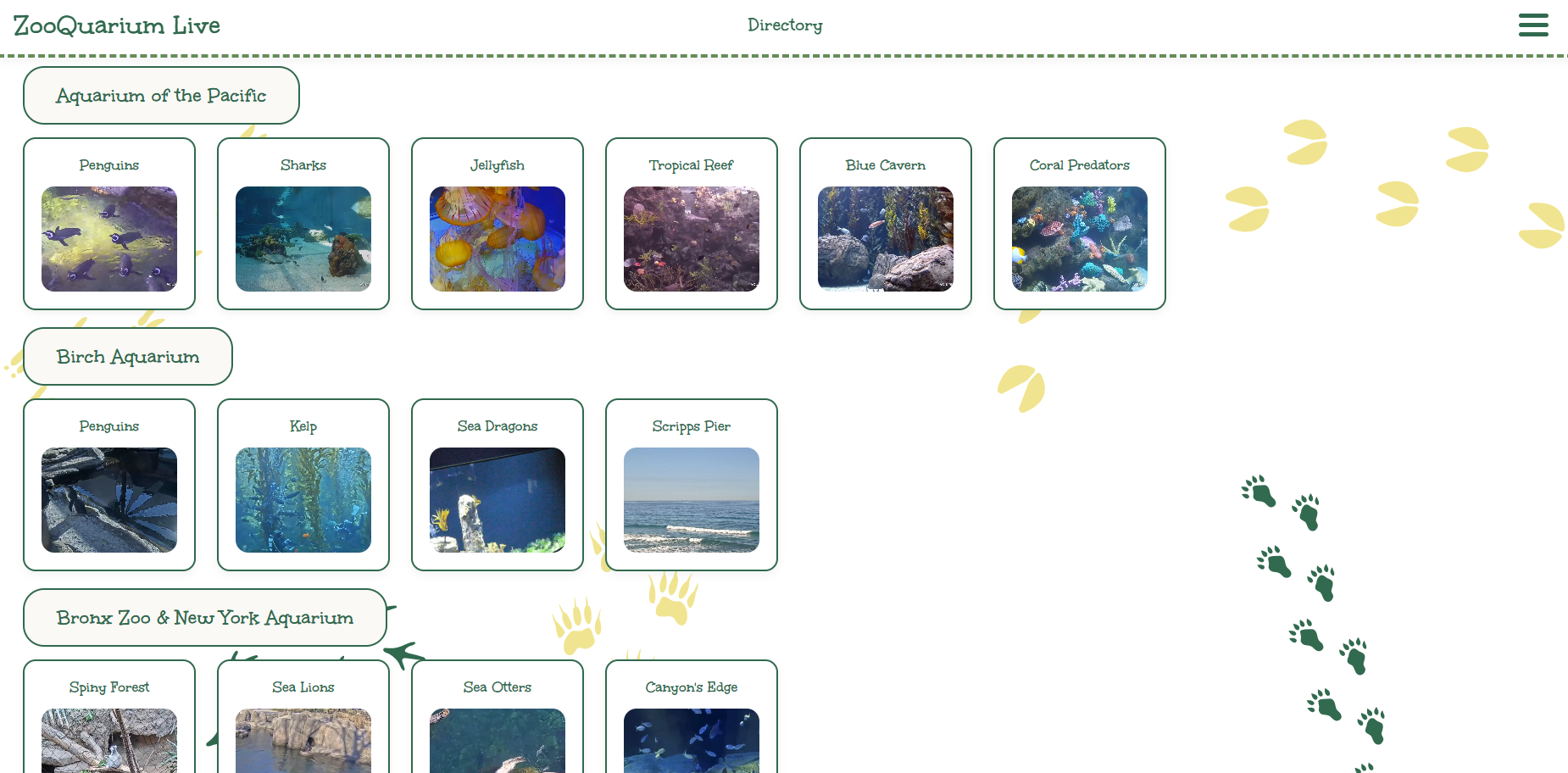
I built the platform from scratch using HTML5, CSS3, and JavaScript. As I translated wireframes into code, I focused on ensuring the interactive map and directory sorting functioned properly across different screen sizes while maintaining web accessibility standards.
ZooQuarium Live demonstrates how a simple interaction can scale into a fully functional product supporting real-world wildlife efforts. It elevates the important missions of existing organizations by streamlining accessibility to educational resources across a range of audiences. In future iterations, I plan to develop advanced filtering options for the interactive map and increase accessibility through a dedicated mobile app experience.